


In-depth analysis of Foreign Direct Investment (FDI) in Vietnam. Explore historical context, benefits, key sectors, legal framework, challenges, trends, and practical guidance for successful investment.
I. Introduction: The Strategic Importance of Foreign Direct Investment (FDI) in Vietnam
Vietnam’s ascent as a leading Southeast Asian economy is inextricably linked to the success and scale of Foreign Direct Investment (FDI) in Vietnam. For decades, a steady influx of international capital, technology, and expertise has been a primary catalyst for the nation’s remarkable development. This investment fuels critical infrastructure projects, powers a globally competitive manufacturing sector, drives export growth, and generates millions of essential jobs. For global businesses seeking expansion, market access, or production efficiency, understanding the dynamics, opportunities, and regulatory environment surrounding Foreign Direct Investment (FDI) in Vietnam is paramount.
This guide thoroughly examines FDI in Vietnam, designed for investors, advisors, and policymakers. We will define FDI within the Vietnamese context, trace its historical evolution, analyze its significant economic impact, and explore the key factors driving its attractiveness. We will also identify the major sectors receiving Foreign Direct Investment (FDI) in Vietnam, discuss the practical benefits and challenges investors encounter, detail the governing legal framework, review current trends, and offer actionable guidance for successful implementation. Engaging effectively with Foreign Direct Investment (FDI) in Vietnam requires an informed strategy, and this guide aims to provide that crucial foundation.
II. Defining Foreign Direct Investment (FDI) in Vietnam: Beyond Capital Injection
1. Core Definition of FDI
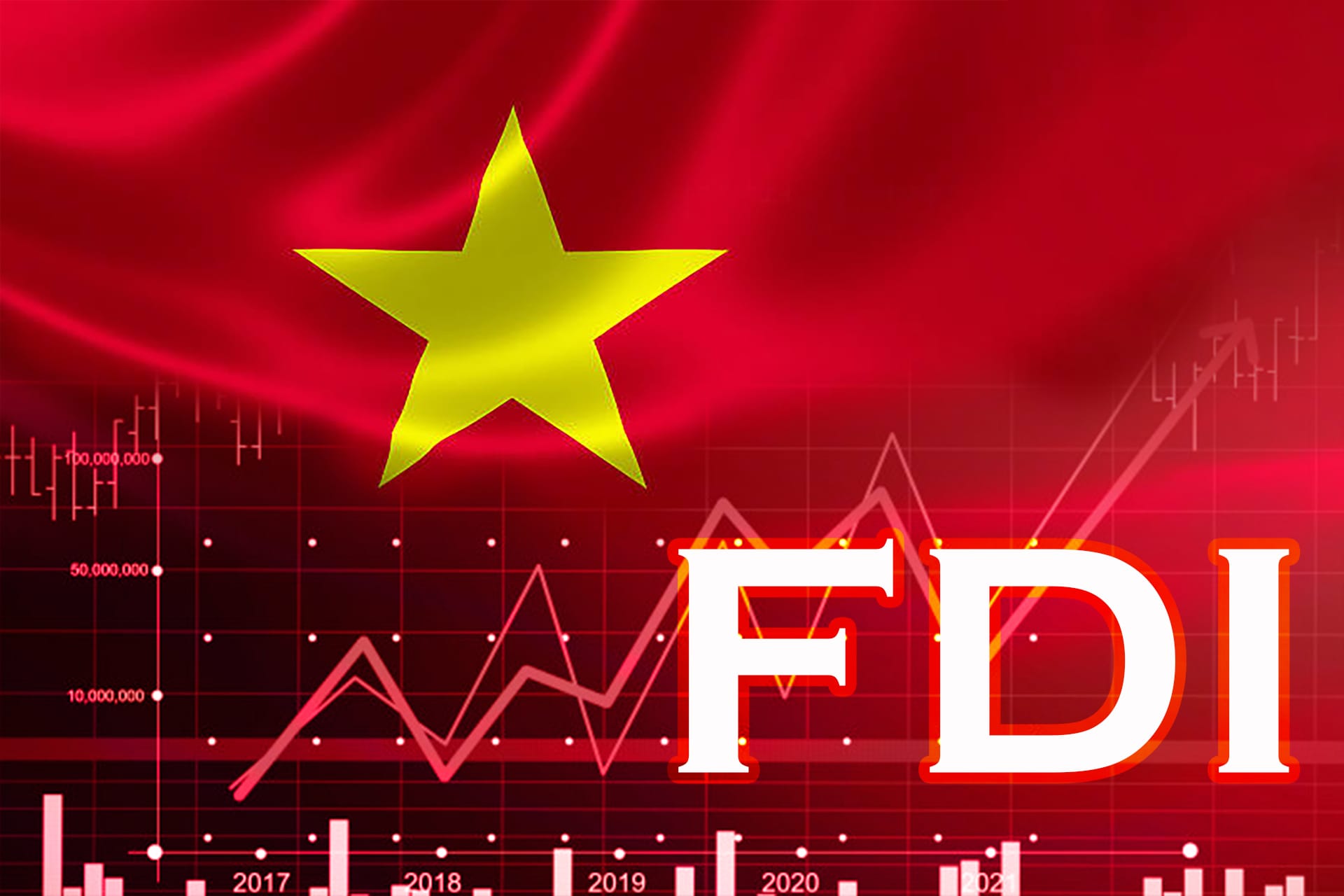
Foreign Direct Investment (FDI) involves an investment by an entity from one country to acquire a lasting interest and a significant degree of management influence in an enterprise operating in another country, such as Vietnam. This distinguishes FDI in Vietnam from passive portfolio investments. Typically, acquiring 10% or more voting power signifies an FDI relationship. Common forms include establishing 100% foreign-owned enterprises (WFOEs), joint ventures (JVs) with local partners, or conducting mergers and acquisitions (M&A).
2. The Broader Impact of Foreign Direct Investment (FDI) in Vietnam
While crucial, capital is only part of the story. FDI in Vietnam acts as a vital channel for transferring intangible assets:
Technology & Know-How: Introducing advanced production methods, machinery, and operational expertise.
Skills Development: Upskilling the local workforce through training and exposure to international standards.
Market Access: Integrating Vietnamese operations into global value chains and export networks.
Enhanced Competition: Stimulating innovation and efficiency among domestic firms.
Recognizing these broader impacts is key to appreciating the transformative role of Foreign Direct Investment (FDI) in Vietnam.
III. The Historical Evolution of Foreign Direct Investment (FDI) in Vietnam
The pathway of FDI in Vietnam reflects the country’s economic opening and global integration journey.
1. Post-Doi Moi Beginnings: Initial Foreign Direct Investment (FDI) in Vietnam
The Doi Moi reforms initiated in 1986 marked the start, with the first Law on Foreign Investment following in 1987. Early FDI in Vietnam (late 80s/early 90s) was modest, focusing on resource extraction and basic manufacturing (textiles, footwear), often via JVs, amidst a developing regulatory and infrastructural environment.
2. WTO Accession and the FDI Surge in Vietnam
Vietnam’s accession to the World Trade Organization (WTO) in 2007 was a watershed moment. It mandated significant legal reforms, increased transparency, and opened more sectors, boosting investor confidence. The subsequent years saw a dramatic increase in registered and disbursed Foreign Direct Investment (FDI) in Vietnam, fundamentally reshaping the economy.
3. Sectoral Maturation of Foreign Direct Investment (FDI) in Vietnam
While manufacturing remains dominant, FDI in Vietnam has progressively diversified. Significant investment now flows into higher-value areas like electronics assembly, automotive components, real estate development (industrial, commercial, residential), modern retail, technology services (software, FinTech, e-commerce), and, increasingly, renewable energy. This shift highlights Vietnam’s success in leveraging FDI for industrial upgrading.
IV. The Vital Significance of Foreign Direct Investment (FDI) for Vietnam’s Economy
The contribution of Foreign Direct Investment (FDI) in Vietnam to the nation’s socio-economic progress is immense and undeniable.

1. Driving GDP Growth through Foreign Direct Investment (FDI) in Vietnam
The FDI sector is a primary engine of Vietnam’s high GDP growth rates. FIEs significantly contribute to industrial output and overall economic activity, stimulating both direct and indirect investment.
2. Job Creation via Foreign Direct Investment (FDI) in Vietnam
FIEs have created millions of direct jobs across skill levels and spurred significant indirect employment in supplier and service industries, playing a crucial role in income generation and poverty reduction.
3. Technology Transfer and Capacity Building from FDI in Vietnam
FDI in Vietnam is a key channel for acquiring modern technology, operational know-how, and quality management systems, enhancing the productivity and competitiveness of local industries through spillover effects.
4. Infrastructure Development Linked to Foreign Direct Investment (FDI) in Vietnam
Large FDI projects often necessitate or directly fund infrastructure improvements (ports, roads, power), particularly within IPs and EZs, creating benefits for the wider economy by improving connectivity and reducing logistics costs.
5. Boosting Exports and Forex Earnings: The Role of Foreign Direct Investment (FDI) in Vietnam
FIEs dominate Vietnam’s export landscape (often >70% of total exports), generating substantial foreign exchange earnings vital for macroeconomic stability, currency support, and financing imports.
6. Enhancing Management and Human Capital through FDI in Vietnam
FDI in Vietnam introduces modern management practices, corporate governance standards, and invests heavily in workforce training, significantly upskilling local labor and management capabilities.
V. Key Factors Attracting Foreign Direct Investment (FDI) to Vietnam
Vietnam’s continued success in attracting Foreign Direct Investment (FDI) in Vietnam rests on several compelling advantages.
See more: How to invest in Vietnam?
1. Economic Growth & Political Stability Supporting FDI in Vietnam
Consistent high GDP growth provides market opportunities, while Vietnam’s stable political system offers predictability and reduces risk for long-term investments – a crucial combination for attracting FDI in Vietnam.
2. Strategic Location as a Magnet for Foreign Direct Investment (FDI) in Vietnam
Centrally located in ASEAN, bordering China, and with extensive coastline access to global shipping routes, Vietnam is ideally positioned for regional manufacturing, logistics, and participation in diversifying global supply chains (“China+1”).
3. Competitive Labor Force Driving Foreign Direct Investment (FDI) in Vietnam
A large, young, trainable, and relatively cost-competitive workforce remains a major draw, particularly for manufacturing FDI in Vietnam, although focus is shifting towards skills alongside cost.
4. Government Incentives Encouraging Foreign Direct Investment (FDI) in Vietnam
Vietnam actively uses tax incentives (CIT reductions/holidays), land rental breaks, and import duty exemptions, often targeted at specific sectors (high-tech, renewables) or locations (disadvantaged areas, IPs/EZs), to encourage high-quality FDI in Vietnam. Ongoing administrative reforms also aim to improve the investment climate.
5. Market Access via FTAs: A Boost for Foreign Direct Investment (FDI) in Vietnam
Vietnam’s extensive network of FTAs (including CPTPP, EVFTA, RCEP) provides preferential access to major global markets, making it an attractive export platform for companies undertaking FDI in Vietnam.
VI. Priority Sectors for Foreign Direct Investment (FDI) in Vietnam
The flow of Foreign Direct Investment (FDI) in Vietnam concentrates in several key areas reflecting national priorities and global trends.
1. Manufacturing & Processing: The Traditional Core of FDI in Vietnam
This remains the largest sector, driven by electronics assembly (smartphones, components), textiles/garments/footwear, automotive parts, and furniture. Vietnam is a critical node in global supply chains, attracting continuous manufacturing FDI in Vietnam. Challenges involve upgrading value chains and developing supporting industries.
2. Real Estate: Significant Foreign Direct Investment (FDI) in Vietnam
Rapid urbanization and economic growth fuel demand for industrial parks, logistics facilities, commercial office space, retail malls, residential projects, and hospitality developments, attracting substantial real estate FDI in Vietnam, especially in major cities and coastal regions. Navigating land regulations is key.
3. Renewable Energy: Emerging Opportunities for FDI in Vietnam
Driven by energy demand and sustainability goals (PDP8), solar and wind power (both onshore and offshore) are attracting significant interest and FDI in Vietnam. Grid integration and evolving policy mechanisms (like DPPAs) are critical areas to watch.
4. Technology & Innovation: A Growing Frontier for FDI in Vietnam
Leveraging a young, tech-savvy population and government support, FDI in Vietnam is increasing in software development, IT outsourcing, FinTech, e-commerce, and R&D activities, positioning Vietnam as a potential regional tech hub. IP protection remains a focus area.
5. Retail & Consumer Goods: Tapping Market Growth via FDI in Vietnam
Rising incomes fuel demand, attracting FDI in Vietnam into modern retail formats (supermarkets, convenience stores, e-commerce) and the manufacturing/distribution of international consumer brands targeting the growing domestic market. Understanding local consumer behavior is crucial.
Potential investors must be prepared for the operational realities and challenges associated with Foreign Direct Investment (FDI) in Vietnam.
1. Administrative Procedures and Bureaucracy Affecting FDI in Vietnam
Despite reforms, processes for obtaining licenses (IRC, ERC, sub-licenses) and permits can be complex, time-consuming, and sometimes lack transparency. Engaging experienced local advisors is highly recommended to navigate the administrative requirements for FDI in Vietnam.
2. Infrastructure Gaps and Logistics Costs Impacting FDI in Vietnam
While improving, logistics infrastructure (ports, roads) can face congestion, leading to higher costs. Power reliability and internet quality can vary by location. Thorough site selection considering infrastructure quality is vital for efficient FDI in Vietnam.
3. Labor Regulations and Compliance: A Key Consideration for FDI in Vietnam
Strict adherence to Vietnam’s comprehensive Labor Code (contracts, wages, overtime, social insurance, safety, termination) is essential but complex. Ensuring compliance, managing labor relations, and obtaining work permits for expatriates requires careful HR management and legal counsel for FDI in Vietnam.
4. Market Competition and Dynamics for Foreign Direct Investment (FDI) in Vietnam
Vietnam’s markets are increasingly competitive. Succeeding requires thorough market research, effective localization strategies, competitive pricing, strong branding, and potentially strategic local partnerships to navigate competition from both domestic and other foreign players involved in FDI in Vietnam.
5. Adapting to the Evolving Legal Framework for FDI in Vietnam
Laws and regulations governing FDI in Vietnam are frequently updated. Investors must proactively monitor changes related to investment, tax, labor, environment, data privacy, etc., and adapt their compliance strategies accordingly, typically with support from local legal experts.
VIII. Understanding Vietnam’s Legal and Policy Framework for Foreign Direct Investment (FDI)
A clear understanding of the legal foundations governing Foreign Direct Investment (FDI) in Vietnam is non-negotiable.
1. Key Legislation Governing Foreign Direct Investment (FDI) in Vietnam
Law on Investment (2020): The primary statute defining investment forms, market access conditions (negative lists), procedures (IRC), incentives, and investor rights/obligations for FDI in Vietnam.
Law on Enterprises (2020): Governs company establishment (ERC), corporate governance, and operations for all enterprise forms, including FIEs resulting from FDI in Vietnam.
Supporting Decrees/Circulars: Essential for detailed implementation guidance (e.g., Decree 31/2021/NĐ-CP for the Investment Law).
2. Investment Incentives Supporting Foreign Direct Investment (FDI) in Vietnam
Vietnam offers CIT and land rental incentives based on sector (high-tech, green tech, R&D), location (disadvantaged areas, IPs/EZs/HTPs), or project scale, aiming to attract high-quality FDI in Vietnam. Proper application during registration is needed to secure these benefits.
3. Special Zones (IPs, EZs, HTPs) for Foreign Direct Investment (FDI) in Vietnam
These designated zones offer ready infrastructure, streamlined administration (“one-stop-shop”), and often the highest levels of incentives, making them preferred locations for many manufacturing and tech-focused FDI in Vietnam projects.
4. Establishment Procedures for Foreign Direct Investment (FDI) in Vietnam
The typical two-stage process involves obtaining an Investment Registration Certificate (IRC) from the relevant licensing authority (DPI or Zone Management Board) followed by an Enterprise Registration Certificate (ERC) from the provincial Business Registration Office. Professional assistance is highly recommended to navigate the documentation and approvals for FDI in Vietnam.
5. Repatriation of Profits and Capital from FDI in Vietnam
Vietnamese law guarantees the right to remit profits, dividends, and other legal income abroad after fulfilling tax obligations and complying with SBV foreign exchange regulations, typically processed through authorized banks using the DICA account and supporting documentation. This provides essential assurance for Foreign Direct Investment (FDI) in Vietnam.
IX. Current Trends and Statistics for Foreign Direct Investment (FDI) in Vietnam
Monitoring recent developments provides context for Foreign Direct Investment (FDI) in Vietnam.
1. Recent Inflows and Resilience of FDI in Vietnam
Despite global challenges, both registered and disbursed FDI in Vietnam have shown resilience, indicating sustained investor confidence. M&A activity is gaining prominence alongside traditional greenfield projects.
2. Leading Investor Countries for Foreign Direct Investment (FDI) in Vietnam
Major Asian economies like South Korea, Japan, Singapore, Taiwan, Hong Kong, and China consistently top the list. US and EU investment is also significant and growing, particularly in higher-value sectors.
2. Sectoral and Regional Distribution Trends in FDI in Vietnam
Manufacturing remains dominant, but FDI in Vietnam is increasingly flowing into real estate (especially industrial), renewable energy, and technology/ICT. Geographically, investment concentrates in established southern and northern industrial hubs, though efforts exist to promote investment in other regions.
3. Impact of Global Events on Foreign Direct Investment (FDI) in Vietnam
Supply chain diversification (“China+1”), global digital transformation, and the green energy transition are major tailwinds driving specific types of FDI in Vietnam. Geopolitical stability relative to some other regions also enhances its appeal.
X. Practical Guidance for Implementing Foreign Direct Investment (FDI) in Vietnam
Successful execution of Foreign Direct Investment (FDI) in Vietnam requires careful strategic steps.
1. Choosing the Appropriate Investment Form for FDI in Vietnam
Select WFOE, JV, BCC, or M&A based on control needs, sector regulations, market access goals, and risk assessment. Each form has distinct implications for governance, liability, and operational flexibility for Foreign Direct Investment (FDI) in Vietnam. Legal advice is crucial.
Follow the IRC and ERC application processes diligently. Prepare thorough documentation, anticipate potential queries from authorities, and consider using experienced service providers to manage the administrative burden associated with establishing FDI in Vietnam.
3. The Importance of Due Diligence for Foreign Direct Investment (FDI) in Vietnam
Conduct comprehensive legal, financial, operational, and market due diligence, especially before entering JVs or undertaking M&A. This critical step identifies risks and informs valuation for Foreign Direct Investment (FDI) in Vietnam.
4. Leveraging Local Partnerships for Foreign Direct Investment (FDI) in Vietnam
If pursuing a JV, select partners carefully based on reputation, expertise, and strategic alignment. Clearly define roles, responsibilities, and governance in robust legal agreements to ensure a successful partnership for your Foreign Direct Investment (FDI) in Vietnam.
XI. Conclusion: The Continuing Promise of Foreign Direct Investment (FDI) in Vietnam
Foreign Direct Investment (FDI) in Vietnam continues to be a cornerstone of the country’s economic dynamism and offers compelling opportunities for international businesses. Vietnam’s blend of stable growth, strategic location, competitive advantages, proactive government policies, and expanding market access through FTAs creates a fertile ground for investment. While navigating administrative complexities, infrastructure limitations, and an evolving legal landscape requires diligence and local expertise, the overall trajectory remains highly positive.
The government’s focus on attracting higher-quality, sustainable, and technologically advanced FDI in Vietnam aligns well with global trends and investor priorities. By understanding the specific market nuances, strategically addressing challenges, and committing to compliant and ethical operations, foreign investors can successfully leverage the significant potential offered by Foreign Direct Investment (FDI) in Vietnam. Engaging with this vibrant economy offers not just financial returns but also the chance to participate in one of Asia’s most exciting growth stories, making Foreign Direct Investment (FDI) in Vietnam a strategic consideration for global businesses looking towards the future.
See more: Vietnam Market Entry Strategy


